Uncategorized

freelance digital marketing expert
Uncategorized

AI SEO Tools Every Marketer Should Use: A Digital Marketer’s Toolkit for Smarter Rankings

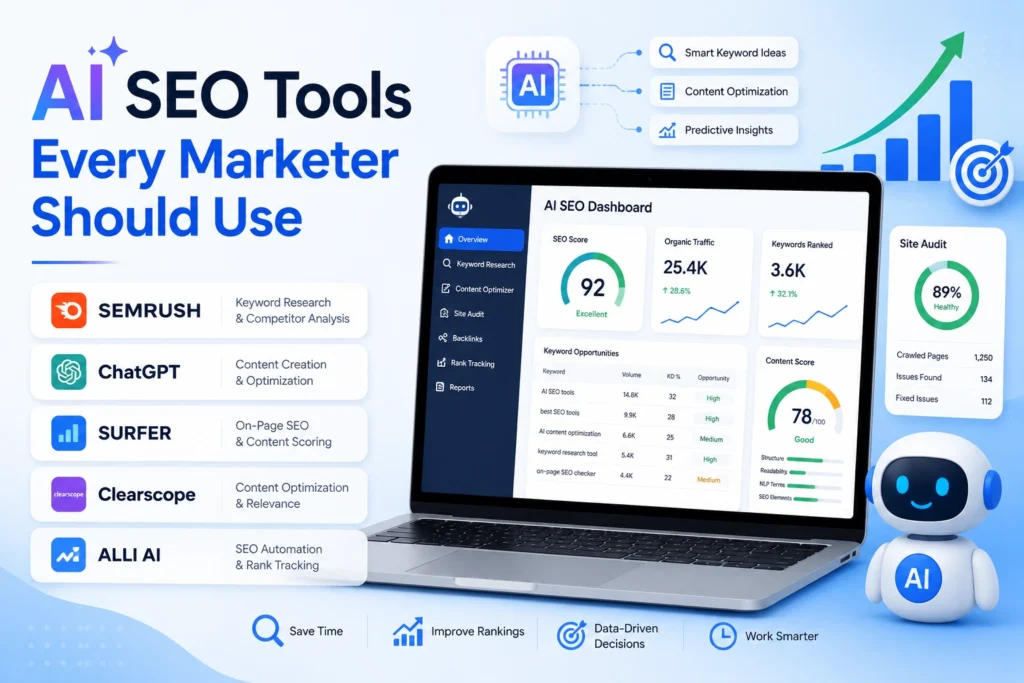
Introduction: Why AI Has Become Essential to Modern SEO Search engine optimization has transformed dramatically over the past few years, and artificial intelligence now sits at the core of that transformation. Consequently, every digital marketer must adapt to a landscape where success depends not only on traditional ranking factors but also on visibility within AI-generated search summaries. As search engines evolve, the tools marketers rely on must evolve alongside them. Moreover, manual SEO processes, such as keyword research, content audits, and competitor analysis, once consumed enormous amounts of time. Today, AI-powered platforms complete these tasks in a fraction of the time while often producing more accurate, data-driven insights. Therefore, understanding which tools genuinely deliver value has become a critical skill for anyone responsible for organic growth. The Shift From Traditional SEO to AI-Driven Optimization Traditional SEO historically focused on ranking within Google’s ten blue links, but that landscape has expanded considerably. Because AI-generated answers now appear across platforms such as ChatGPT, Perplexity, and Google’s AI Overviews, marketers must optimize for a much broader ecosystem. As a result, the discipline once known simply as SEO now increasingly overlaps with Generative Engine Optimization, or GEO. Furthermore, this shift does not eliminate the importance of traditional ranking fundamentals; rather, it builds upon them. Since many AI platforms still draw from established search indexes, strong technical SEO and authoritative content remain foundational. Consequently, the most effective tools address both traditional visibility and emerging AI-driven discovery simultaneously. Semrush: A Comprehensive Platform for Visibility Across Channels Semrush has long served as an all-in-one solution for keyword research, competitor analysis, and site auditing. In recent years, the platform has expanded its capabilities to track brand visibility across AI platforms, monitoring how often a brand appears within AI-generated answers across multiple regions. As a result, marketers gain a unified view of both traditional rankings and AI search presence. In addition, Semrush’s AI-assisted features help streamline everyday workflows, including content recommendations and site health monitoring. Because the platform consolidates so many functions into a single dashboard, agencies and in-house teams alike can reduce the number of separate tools they manage. Therefore, Semrush remains a strong starting point for any digital marketer seeking a comprehensive, data-rich foundation. Ahrefs: Backlink Intelligence Enhanced by AI Ahrefs built its reputation primarily on backlink analysis, and that strength continues to anchor its platform today. Because backlinks remain a significant ranking factor, Ahrefs’ frequently updated index gives marketers a reliable foundation for competitive research. Consequently, the tool remains especially valuable during client onboarding, when understanding a competitive landscape quickly matters most. Moreover, Ahrefs has layered AI capabilities on top of its existing dataset, streamlining keyword research, content planning, and technical audits. This integration allows marketers to move from raw data to actionable insight more efficiently than before. As a result, teams that already rely on Ahrefs for backlink research can extend its value into broader AI-informed strategy without switching platforms entirely. Surfer SEO: Real-Time Content Optimization Surfer SEO focuses specifically on content optimization, analyzing top-ranking pages to guide structure, terminology, and target length. Its Content Editor provides real-time scoring as writers draft their content, which helps ensure alignment with what search engines already reward. Consequently, teams producing high volumes of content benefit from immediate, actionable feedback rather than waiting for post-publication analysis. In addition, Surfer has expanded its semantic analysis capabilities, moving beyond simple keyword density toward genuine topical relevance. Because this shift mirrors how search engines themselves evaluate content quality, writers using Surfer tend to produce material that satisfies both algorithms and human readers. Therefore, this tool works particularly well for teams that prioritize consistent, scalable content production. Clearscope and Frase: Optimizing Human-Written Content Clearscope specializes in helping writers refine already-drafted content by scoring it against top-ranking competitors in real time. Since many teams prefer to maintain a human-first writing process, this tool fits naturally into workflows where AI assists rather than replaces the writer. As a result, Clearscope appeals strongly to teams that value editorial control alongside data-driven guidance. Similarly, Frase combines keyword research, content briefs, and an integrated editor into a single streamlined workflow. It analyzes top-ranking pages for a given keyword and generates outlines based on those findings, saving considerable research time. Furthermore, Frase has begun incorporating dual scoring that evaluates content against both traditional search results and emerging AI platforms, reflecting the industry’s broader shift toward GEO. MarketMuse and SE Ranking: Strategic Planning and All-in-One Value MarketMuse takes a more strategic approach by modeling topical authority across an entire website rather than optimizing individual pages in isolation. Its AI inventories existing content and produces prioritized topic clusters, helping marketers identify content gaps before competitors fill them. Consequently, this tool proves especially valuable for teams building long-term content strategies rather than isolated campaigns. Meanwhile, SE Ranking offers a strong price-to-value ratio by combining rank tracking, site audits, keyword research, and AI-powered content optimization within one platform. Because it delivers a broad feature set without the premium pricing of larger competitors, SE Ranking suits smaller teams and growing agencies particularly well. Therefore, marketers operating with tighter budgets can still access many of the same core capabilities found in more expensive platforms. Tracking Brand Visibility Across AI Platforms As AI-generated answers increasingly influence how consumers discover brands, tracking visibility within these platforms has become just as important as monitoring traditional rankings. Several tools now specialize in this exact function, showing marketers where their brand appears across ChatGPT, Perplexity, Gemini, and Google’s AI Overviews. Consequently, this visibility data reveals opportunities that traditional rank tracking alone cannot capture. Furthermore, some of these platforms identify the specific sources that AI systems cite most frequently, such as review sites, forums, or comparison articles. By understanding which sources already earn AI trust, marketers can pursue placements on those platforms to indirectly strengthen their own visibility. As a result, AI visibility tracking has emerged as a distinct discipline that complements, rather than replaces, traditional SEO monitoring. How to Choose the Right AI SEO Tool for Your Team Selecting
short-form video marketing
Uncategorized

How Short-Form Videos Increase Brand Awareness: A Digital Marketer’s Guide to Scroll-Stopping Growth

Introduction: Why Attention Has Become the New Currency short-form video marketing. in today’s crowded digital landscape, brands compete for a resource far scarcer than money: attention. Consequently, every digital marketer must find ways to capture interest within seconds, or risk losing a potential customer to the next post in an endless scroll. Short-form video has emerged as the most effective tool for winning this battle, and its influence on brand awareness continues to grow each year. Moreover, as consumer habits shift toward quick, snackable content, traditional advertising formats struggle to keep pace. Long-form commercials and static images simply cannot match the immediacy that short-form video delivers. Therefore, understanding why this format works, and how to use it strategically, has become essential for any brand seeking sustainable visibility. What Defines Short-Form Video Content? Short-form video generally refers to clips lasting between fifteen seconds and three minutes, designed for fast consumption on platforms such as TikTok, Instagram Reels, and YouTube Shorts. Because these videos are brief by design, creators must communicate their message quickly and clearly. As a result, this format rewards creativity and punishes unnecessary complexity. In addition, short-form video differs from traditional advertising in tone and structure. Rather than following a polished, scripted format, these videos often feel spontaneous, authentic, and native to the platform on which they appear. Consequently, audiences perceive them as less intrusive than conventional ads, which increases the likelihood that viewers will watch until the end. The Psychology Behind Short-Form Video’s Popularity short-form video marketing Human attention spans have not necessarily shortened, but the volume of content competing for that attention has expanded dramatically. Because of this abundance, viewers instinctively gravitate toward content that delivers value immediately. Short-form video satisfies this preference by front-loading its most engaging elements within the first few seconds. Furthermore, the rapid pacing of short-form content triggers dopamine responses similar to those associated with other quick-reward activities. Each swipe offers the possibility of something entertaining, surprising, or useful, and this unpredictability keeps viewers engaged. Consequently, brands that tap into this psychological pattern position themselves to be remembered long after the video ends. How Short-Form Video Expands Reach Organically short-form video marketing Unlike many other content formats, short-form video benefits from algorithms specifically designed to promote discovery. Platforms such as TikTok prioritize showing content to new audiences based on engagement signals rather than existing follower counts. Therefore, even brands with modest followings can achieve substantial reach if their content resonates with viewers. Additionally, this discovery-driven distribution model levels the playing field between large corporations and smaller businesses. Because algorithmic reach depends on content quality and engagement rather than advertising budget alone, a well-crafted short-form video can outperform a costly traditional campaign. As a result, brand awareness grows organically, often at a fraction of the cost associated with other marketing channels. Building Emotional Connections Through Authentic Storytelling Short-form video excels at conveying emotion quickly, which strengthens the bond between a brand and its audience. Through humor, relatability, or genuine behind-the-scenes moments, brands can showcase their personality in ways that static content cannot replicate. Consequently, viewers begin to associate positive feelings with the brand itself, not merely its products. Moreover, authenticity plays a critical role in this emotional connection. Audiences increasingly favor content that feels genuine over content that appears overly produced or promotional. Therefore, brands that embrace imperfection and showcase real people, real processes, and real stories tend to build stronger, more lasting awareness than those relying solely on polished advertisements. Leveraging Trends and Challenges to Amplify Visibility short-form video marketing Trending sounds, challenges, and formats offer brands a unique opportunity to insert themselves into ongoing cultural conversations. When a brand participates in a relevant trend, its content becomes discoverable to audiences already engaging with that trend. As a result, brand awareness spreads through association with content that users are already actively seeking out. Nevertheless, successful trend participation requires timing and relevance. Jumping on a trend too late, or applying it in a way that feels forced, can damage credibility rather than build it. Therefore, a skilled digital marketer must monitor trends continuously and adapt quickly, ensuring that brand involvement feels timely, natural, and genuinely additive to the conversation. Measuring the Impact of Short-Form Video on Brand Awareness short-form video marketing To justify continued investment in short-form video, marketers must track meaningful metrics beyond simple view counts. Engagement rate, watch-through percentage, and share volume all provide deeper insight into how effectively a video captures and retains attention. Consequently, these metrics reveal whether content is truly resonating with its intended audience. In addition, brand lift studies and social listening tools help quantify awareness gains that are not immediately visible through standard analytics. By monitoring mentions, sentiment, and search volume before and after a video campaign, marketers can establish a clearer connection between short-form content and overall brand recognition. Therefore, combining quantitative and qualitative data produces the most accurate picture of campaign success. Common Mistakes Brands Make With Short-Form Video short-form video marketing Despite its accessibility, short-form video is not immune to strategic missteps. One frequent mistake involves repurposing long-form advertisements without adapting them to the pacing and tone that short-form platforms demand. Because audiences expect quick, native-feeling content, repurposed ads often feel out of place and fail to capture attention. Similarly, many brands underestimate the importance of consistency, posting sporadically rather than maintaining a steady content cadence. Since algorithms favor accounts that publish regularly, inconsistent posting limits a brand’s ability to build sustained visibility. Therefore, marketers should establish a realistic content calendar that balances creative quality with consistent frequency. Best Practices for Creating High-Impact Short-Form Content Effective short-form video begins with a strong hook delivered within the first three seconds, since this brief window determines whether viewers continue watching. Additionally, incorporating clear branding elements, such as logos or consistent visual styles, helps reinforce recognition even among viewers who do not follow the account. As a result, repeated exposure gradually builds familiarity and trust. Furthermore, ending each video with a clear call to action encourages

core web vitals
Uncategorized

Core Web Vitals Explained: The Digital Marketer’s Blueprint to Better Rankings

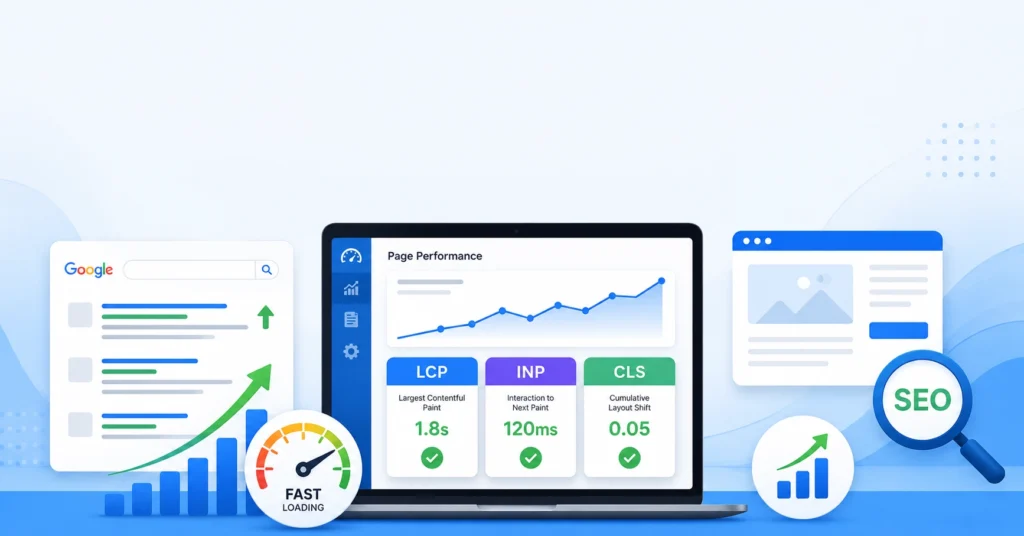
Introduction: Why Core Web Vitals Matter Now Search engines no longer reward content alone; they also evaluate how a website performs while delivering that content. Consequently, every digital marketer must understand the technical signals that shape search visibility, not merely the creative ones. Core Web Vitals sit at the center of this shift, and they quietly determine whether a page earns a strong ranking or fades into obscurity. Furthermore, as competition for organic traffic intensifies, ignoring these performance metrics carries real consequences. Websites that load slowly or shift unexpectedly frustrate visitors, and search engines interpret that frustration as a signal of poor quality. Therefore, understanding Core Web Vitals is no longer optional; it has become a foundational skill for anyone responsible for organic growth. What Are Core Web Vitals? A Foundational Overview Core Web Vitals represent a specific set of metrics that Google uses to measure real-world user experience on a webpage. Specifically, these metrics evaluate three critical dimensions of performance: loading speed, interactivity, and visual stability. Because these factors directly affect how visitors perceive a site, search engines treat them as meaningful ranking signals. Moreover, unlike many traditional SEO factors, Core Web Vitals rely on measurable, quantifiable data rather than subjective judgment. As a result, website owners can track their performance with precision and identify specific areas that require improvement. This objectivity gives every digital marketer a clear roadmap for prioritizing technical fixes rather than guessing which changes might help. Largest Contentful Paint (LCP): Measuring Loading Performance Largest Contentful Paint, commonly abbreviated as LCP, measures the time it takes for the largest visible element on a page to fully render. This element often includes a hero image, a video thumbnail, or a large block of text. Consequently, a fast LCP score reassures visitors that the page is loading properly and that meaningful content is on its way. In addition, Google recommends that websites achieve an LCP of 2.5 seconds or faster to deliver a good user experience. When LCP times exceed this threshold, visitors frequently abandon the page before it finishes loading. Therefore, marketers should treat LCP as an early warning system that reveals whether server response times, render-blocking resources, or oversized media files are undermining performance. Interaction to Next Paint (INP): Measuring Responsiveness Interaction to Next Paint, known as INP, evaluates how quickly a page responds to user interactions such as clicks, taps, and keyboard inputs. Unlike its predecessor metric, INP captures responsiveness throughout the entire visit rather than focusing on a single moment. As a result, it offers a more comprehensive picture of how a site behaves under real usage conditions. Additionally, a sluggish INP score often signals that JavaScript execution is blocking the browser’s main thread. When this happens, buttons feel unresponsive, forms lag, and menus fail to open promptly. Consequently, developers and marketers must collaborate closely to reduce unnecessary scripts and streamline interactive elements, thereby ensuring that every click produces an immediate and satisfying response. Cumulative Layout Shift (CLS): Measuring Visual Stability Cumulative Layout Shift, or CLS, quantifies how much a page’s content moves unexpectedly while it loads. For instance, if an image loads late and pushes text downward just as a visitor attempts to click a link, that shift creates frustration and erodes trust. Because this experience feels chaotic, search engines penalize pages with high CLS scores. Similarly, unstable layouts often stem from missing size attributes on images, dynamically injected content, or web fonts that load slowly and cause visible text reflows. To address this issue, developers should reserve space for every visual element before it loads. In doing so, they eliminate the jarring movement that damages both user satisfaction and search performance. Why Core Web Vitals Influence Search Rankings Search engines prioritize user satisfaction above nearly every other consideration, and Core Web Vitals provide a direct window into that satisfaction. When a page loads quickly, responds promptly, and remains visually stable, visitors stay longer and engage more deeply. Naturally, search algorithms recognize these behavioral patterns and reward the pages that produce them. Nevertheless, Core Web Vitals do not operate in isolation; they work alongside content relevance, backlink authority, and mobile usability to determine overall ranking potential. Even so, a page burdened by poor performance metrics rarely outranks a well-optimized competitor, regardless of how strong its content may be. Thus, every digital marketer should view technical performance as a prerequisite for ranking success rather than a secondary concern. How a Digital Marketer Can Diagnose Core Web Vitals Issues Diagnosing performance problems begins with reliable measurement tools, and fortunately, several free resources make this process accessible. Google PageSpeed Insights, Search Console’s Core Web Vitals report, and Lighthouse all provide detailed breakdowns of loading speed, interactivity, and visual stability. By reviewing these reports regularly, marketers can identify which pages need immediate attention. Subsequently, it becomes essential to distinguish between field data and lab data, since each serves a different diagnostic purpose. Field data reflects real user experiences collected over time, while lab data simulates performance under controlled conditions. Consequently, marketers should use lab data to test proposed fixes before deployment and rely on field data to confirm that those fixes produced measurable improvements in the real world. Practical Strategies to Improve Core Web Vitals Improving Core Web Vitals often requires a combination of technical adjustments rather than a single fix. First, compressing images and serving them in modern formats significantly reduces load times and strengthens LCP scores. Second, minimizing render-blocking JavaScript and deferring non-critical scripts allows the browser to display content more quickly. Furthermore, implementing a content delivery network, or CDN, distributes site resources across multiple servers and reduces latency for visitors in different geographic regions. In addition, setting explicit dimensions for images and embeds prevents unexpected layout shifts, while reducing third-party scripts limits their negative impact on responsiveness. When marketers combine these strategies thoughtfully, they create a cumulative effect that meaningfully improves overall site performance. Common Mistakes to Avoid When Optimizing for Core Web Vitals Despite good intentions, many teams undermine their own optimization

Scroll to Top